Dwarf Hummingbird Mint 'Poquito Dark Blue'
Agastache 'Poquito Dark Blue'
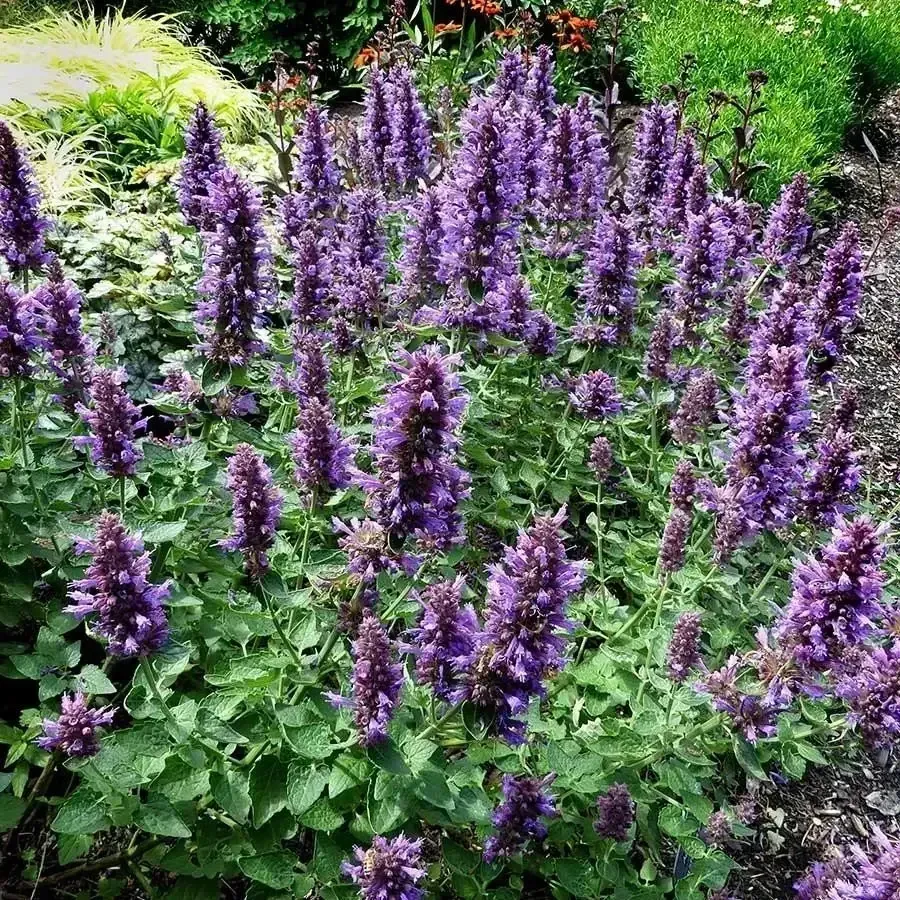
In growth
In bloom
Planting Guide
| Spacing | 12 to 15 inches |
|---|---|
| Planting depth | Crown at soil level |
| Mature size | 10 to 14 inches x 12 to 14 inches |
| Chilling hours | 0 |
| Life expectancy | 3-5 years |
| Growth rate | Fast |
| Planted | 2024 |
| Bed | To Be Sorted |
Growing Conditions
| Sun | Full Sun - Partial Shade |
|---|---|
| Water | Average |
| Soil type | Well-draining potting mix ideal |
| Soil pH | 6.0 – 7.0 |
| Zones | 5-9 |
| Native status | Cultivar |
Appearance
| Type | Perennial |
|---|---|
| Leaf | Lanceolate (Long tapering tip) |
| Foliage colour | Green leaves, edged with greenish undersides |
| Bloom | Slightly blue to dark purple flowers with white or yellow center |
| Fruit | Nutlet |
| Evergreen | Herbaceous |
Root System
| System | Fibrous/Adventitious Systems |
|---|---|
| Morphology | Fine Roots (< 2 mm) |
| Function | Absorptive Roots (Lower Orders) |
| Propagation | The best time for cuttings or division is late spring through early summer. Use sharp, clean tools to take semi-hardwood stem pieces about four inches long with several nodes. |
Wildlife & Safety
| Attracts | Bees, Butterflies, Hummingbirds |
|---|---|
| Deer | Both |
| Toxicity | Non-toxic |
| Edibility | None |
| Companions | Lavandula angustifolia, Salvia, Echinacea |
Where it came from
| Grower | Pending |
|---|---|
| Bought at | Kulak's Nursery |
Care
This dwarf variety grows well in containers with regular potting soil; trim for shape and size. Ensure good air circulation around the plant.
Maintenance
Water when top inch of soil feels dry, provide a sunny spot or partial shade avoiding full afternoon sun during hot weather months (July-August). Fertilize with balanced liquid fertilizer every six weeks. Deadhead spent blooms to promote reblooming.
Cleanup
Deadhead spent flower spikes in summer to encourage continuous reblooming. In Clifton Park, wait until early spring to cut the plant back by about one-third; leaving the stems through winter helps protect the crown.
Notes
Yes, Agastache 'Poquito Dark Blue' is edible:Flavor Profile: The leaves have a distinct anise or licorice flavor.Usage: Fresh or dried leaves are excellent for herbal teas, while the deep blue flowers make a striking edible garnish for salads and desserts.