Care
Prunning Summer.
It is important to note that Berberis thunbergii (Japanese barberry) is classified as an invasive species in New York State. While specific cultivars like 'Sunjoy Orange Pillar' are still widely sold, they can escape cultivation via birds spreading seeds into local woodlands. In NY, these plants are known to create dense thickets that harbor higher populations of ticks.
Maintenance
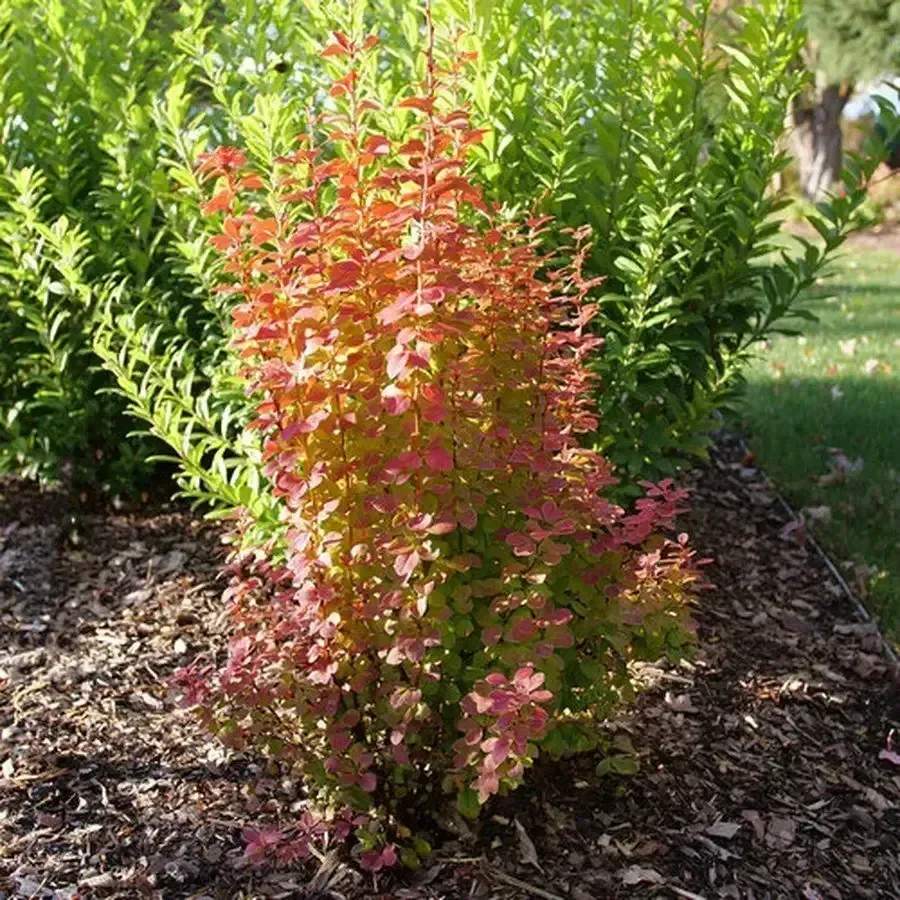
This shrub is valued for its naturally tidy, columnar habit and generally requires very little work to stay looking sharp.
When to Prune: The best time for light shaping is in late winter or early spring before new leaves emerge. You can also do a light trim in summer to maintain its vertical form.
Cleanup
Cleaning up after barberries can be tricky due to their small, spiny branches.Tarp Trick: Lay a heavy-duty garden tarp under the bush before you begin pruning to catch the thorny clippings for easy disposal.Debris Removal: Clear out fallen leaves and debris from the center of the plant periodically to improve airflow and prevent disease.
Notes
Not edible and is considered mildly toxic to both humans and pets if ingested. While some members of the Berberis genus have edible fruit, this specific Japanese barberry variety contains berberine, which can cause gastrointestinal distress, such as stomach upset, vomiting, or diarrhea.